
What You’ll Learn:
- What “unblending the funnel” means and why it’s critical for revenue planning
- How to build a bottoms-up revenue model that actually works
- The difference between top-down vs. bottoms-up planning approaches
- How to set up an effective operating rhythm (weekly, monthly, quarterly, annual)
- Which metrics to track at each level of granularity
- How to identify problems early by comparing actuals vs. projections
- Practical framework for breaking down your business by segments, channels, and markets How to calculate conversion rates that actually serve your revenue model
- Real dashboard examples showing how to “double-click” into problem areas How to facilitate the annual planning conversation between finance, exec team, and board
Key Takeaways:
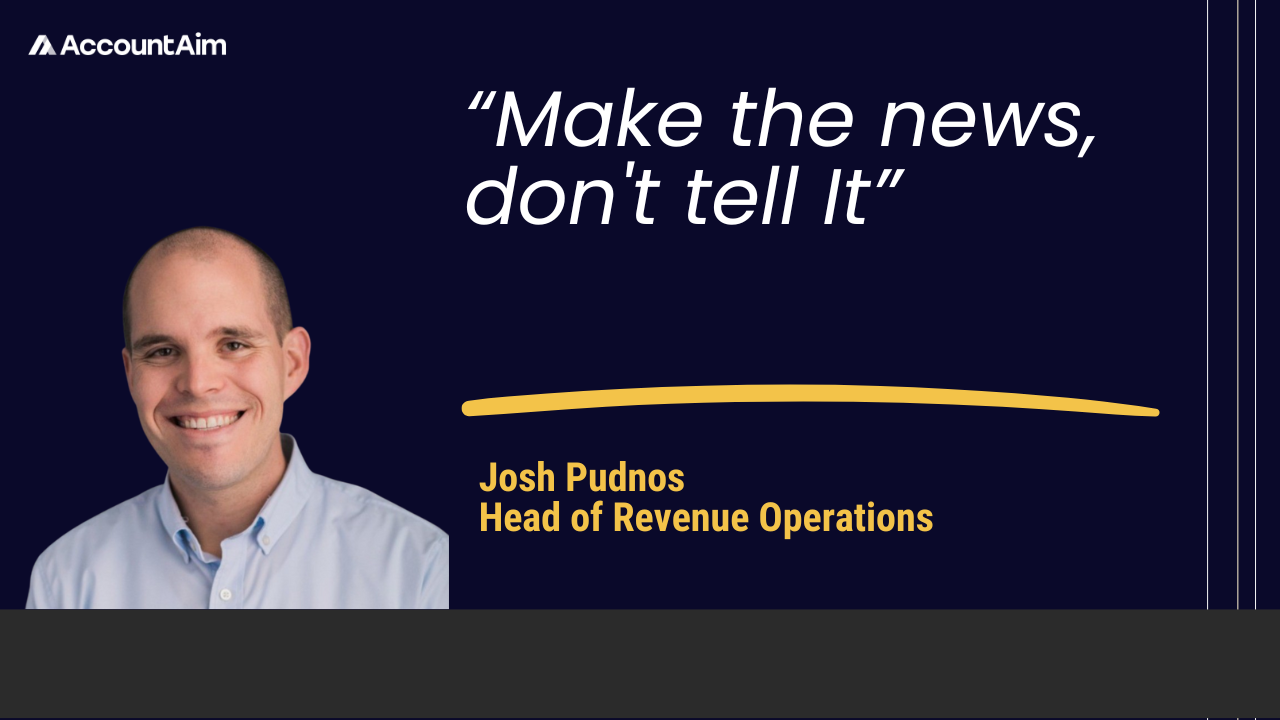
- RevOps should “make the news, not tell the news” – focus on corrective action, not just reporting
- Break down your business into units/segments/markets to understand behavior patterns
- Use historical data (ACV, sales cycle, conversion rates) to project forward
- Model different scenarios to understand impact of hiring, investments, and strategic changes
- Compare projected vs. actual performance to quickly spot where you’re off track
- Focus on both problem areas AND where you’re seeing success
Featured Speaker: Josh Padnos, Head of Revenue Operations (growth-stage B2B SaaS companies scaling from $30M-$100M+)
Perfect for: RevOps leaders, Sales Ops, Marketing Ops, Finance/FP&A teams involved in revenue planning
Transcript:
Are Unblended Funnels the missing piece of your GTM analytics?
Josh McClanahan: this should be really fun. Uh, really excited for this one, uh, as I am with all of these. But this one in particular, I had never heard the phrase unblending the funnel until, uh, until we were chatting Josh.
So, uh, I’m excited to, uh, to, to, to, uh, hop into this one here.
Josh Pudnos: Yeah, I wish I, I wish I remembered who first, you know, who, who I first heard that from. Um, but there’s multiple kind of different ways of talking about what we’re about to talk about and, and I’ll probably mention a few of those.
Josh McClanahan: Amazing. Well, why don’t we get into it.
Uh, we’ve got folks coming in. Um, Josh, why don’t you give us just kinda quick background on yourself here, and then, I know we’ve got a lot to cover. We’ve got 30 minutes allocated. Um, so let’s just get into, uh, into the content here and hopefully, uh, make rev ups a little bit easier for, for the folks listening.
Josh Pudnos: Yeah, so my name is Josh Pudnos. Uh, I’m located in New York City. Uh, I’ve been head of RevOps for a few different companies, uh, primarily. Uh, at, at this growth stage where there’s a lot of them growing from 30, 40, 50, 60 million, wanna get to a hundred million plus, uh, and beyond, and, and being a big part of that scaling motion.
Um, so that’s what gets me really excited. Uh, I’m actually starting something new, uh, next week that, uh, you know, not just disclosing yet, but um, again, another really rapidly growing company. Really exciting stuff. And, um, I think this is, this is a key part of what I’m gonna be doing and, and even. How I got the job is talking about this, uh, exactly what we’re talking about, which is unblending the funnel.
And so we’ll talk about then kind of going into maybe the agenda here. Um, what does that mean? How do we use it? Um, why do we use it? What are some of the metrics we should be looking at? And then I’ll even give sort of a, a part of an example, um, in how I might operationalize this unblended funnel.
Josh McClanahan: I really looking forward to it.
Um, so just a couple quick reminders. We’ll share the recording here with everybody that’s listening. Um, if you have any questions as we go, there’s a q and a function in, uh, in the bottom. Uh, feel free to click on that, uh, ask any questions that you might have as we start to cover it. Um, we’ll be kind of peppering in questions throughout, um, and also saving a couple for the end that we’ve already gotten.
So, uh, amazing. Looking forward to diving in here, Josh.
Josh Pudnos: Yeah, so this will be a bit of a presentation, but like, let’s make this conversational, uh, want it, want it to be engaging and, and, uh, valuable for you guys. Again, this has been what’s successful for me. I think, uh, you know, a lot of the, the go-to-market leaders I talk about, talk about their operating rhythm, and in RevOps, we’re, we’re the ones that operationalize that.
You know, you have an, you have an annual plan, and I’m about to talk about this in a second. You have, you know, you talk about your, your budget for the year. We, we have to hit this number by the end of the year, the quarter, whatever, whatever, uh, period that may be. Um. In so much ways. I, I, we are the ones who have to really understand that, understand how are we tracking to that and why are we off course, are we on course?
And like, what can we do to fix that? And that’s all, that’s, that’s what this is all about. Um, so I’ll first talk about that operating rhythm. Um, it’s, it’s different for every business and, you know, you wanna make an agreement with your leadership about what works for them, um, what’s gonna be most impactful.
But some sort of like, regularly, you know, some regular. Uh, cadence where you’re, you’re diving into the numbers or a certain group of the numbers on a weekly basis, and it may be different, you know, in, in the past, I’ve, I’ve worked with. Um, it might be my CMO, uh, CRO and, and Leewood Chief Customer Officer, all at the same time, looking at all the numbers together.
And, and I think that drives a lot of great alignment. Uh, I might have separate conversations with just the CMO where we’re talking in, uh, you know, top of the funnel data and, and looking at, uh, a certain channel and how that’s performing. But the point is to look at this on a regular basis so that you can, you can identify problems.
Early on and understand why you’re having that problem. Or maybe on the flip side, why are we having success, um, and how can we duplicate that? Or what strategic decisions can we, can we make to, uh, get us on the right track? So I’ll, I’ll talk a little bit more about that. Um, so that’s on a, a weekly or biweekly, some sort of, uh, more frequent cadence.
And then monthly it’s about, okay, we’ve done these actions to correct the correct course. What impact does that have on the quarter or what, what impact does that have on the half of the year? Um, meaning quarterly to be able to discuss those things, how the business is doing at a higher level and what impact does that have on the end of the year and into next year if you have a longer sales cycle.
Uh, and then of course an annual cadence where you’re, you’re, you’re looking at all these numbers, but also, uh, and, and we’ll talk a little bit about the work that has to go into this, uh, to. To, uh, project this forward for the next year, but you’re obviously, you’re gonna be hopefully at some point working on a plan for next year and, and that should be informed by a lot of these data as well.
Josh McClanahan: Josh, one question that, uh, already started to come in is how, how do you keep folks, uh, focused when you’re meeting with them weekly? Um, I think one of the, the challenges that we’ve heard in the past is folks getting, like, really burned out with these meetings. You know, they start out really strong. It’s like, yes, we’re all, you know, excited to be here.
We’re all excited to dive into this. Uh, over time it kind of can, it can start to feel a little bit more like a chore. Um, yeah. How do you keep people like engaged, interested? How do you make sure that these, uh, you know, kind of meetings stay, you know, as helpful as they, they probably should be.
Josh Pudnos: Yeah, that’s a great question.
I think it’s all about this, uh, the corrective action piece. Um, I’m gonna, I’m gonna use another stolen phrase, and again, I wish I could attribute it to the right person, but, um, rev up should be about, uh, telling the news or making the news rather than telling it. So I think it can get monotonous and boring when you’re in there.
Like, all right, uh, well we got six new SQLs last week and blah, blah. Like. That is not interesting. Yes, I would check out as well. The biggest data nerd in the world is gonna check out on that. But if you say, Hey, um, we are, you know, 17% below our, our, our, you know, uh. Our pipeline number of SQLs This, this month.
Um, again, last, yeah, last month we were 10 behind. This is trending this way, and when we dig into the numbers, and I’ll show you guys how to do this, when we dig, when we double click and double click and double click and get to the most granular level, we can see that this is happening in our business. I think it’s because.
X, Y and z reason. I validated that using these methods. And here’s what we’re gonna do about it and like, let’s talk about the buy-in, what change we’re gonna bring about in the, in that part of the organization or across the organization to improve that. And then next week we’re gonna follow up and see that’s that working.
How well is that working? Um, and, and continuing to iterate on that. So that, that’s the piece that I think is what’s missing for a lot of folks. And again, I’ll, I’ll show you how to, how to get there.
Josh McClanahan: Super helpful. Thanks, Josh.
Josh Pudnos: Thanks. Yeah. Um, and, and I think another big, another thing that’s really missing from like these cadences, whenever you’re meeting with your VP of sales or your CRO, you know, talking about the numbers we’re on track.
We’re off track. Great. That’s certainly important, but why? And what, there are 10 different reasons, probably why we’re on or off track and what, and, and then, and then 10 more reasons for each of those, like, things that we can be doing differently. Um, which ones should we do? What’s, what can we actually operationalize and, and how are we gonna move the needle?
So what is a, I’m gonna use these sort of interchangeably, but, uh, unblending the funnel. We’re gonna unblend the funnel, you know, the funnel you have. We have, if we get a hundred SQLs working in a, you know, uh, 80% of those are gonna convert to stage one or whatever your stages may be, and 50% of those are gonna convert to stage two and 20.
You have this funnel and that’s, you could say like, that’s the business. That’s how we get to, you know, we need to hit $83.5 million next year. That’s how you get there. But to unblend it means to, to. There are elements within each of, you know, within the, the broader funnel that really help illuminate how your business is working.
And so un planning the funnel means I want to see at the most granular level. Granular level that makes sense. How is my business working? How are we getting a lead in? Where is it coming from and how does that convert through the, the, the funnel? Um, so what does it mean to unblend the funnel? To me, this is essentially the tops down, uh, top down versus bottoms up revenue model.
Revenue model. Again, kind of the same, same thing, like we get, we get this, it’s gonna convert at this rate at this dollar size, and it’s gonna yield this result. And so a lot of times you’ll get a, a top down number from finance and the executive team we. And I, the example I give here is like, you know, we’re at $20 million this year.
We want to grow 50% next year. That means we need, at the end of next year, we need to hit $30 million. Um, that’s great. It’s good to have goals, but how are you gonna get there? And that, that is the bottoms up model. And you get to that bottoms up model by unblending the funnel. So to do this, you break down the business into those units, segments, markets that apply most to your company.
Maybe you’re very geographically based. Maybe you have certain industry verticals that are really important, and the teams that focus on those things behave different from others. Like behavior is gonna be really important because you’re gonna look at historical numbers and see this team or this region, or this segment or this unit, they behave this way, and so we can expect them to behave more or less the same.
In the, the next period that we’re talking about here. And so you may also wanna look at, you know, maybe new li new business versus expansion. Um, and, and because, you know, the dollar value, the, the, the, the dollar size of, of the average deal there is gonna be different. The sales cycle is gonna be certainly different.
And so you want to take these into consideration. Uh, what makes most sense for you? So you break those down. Once you have those units or segments or markets, uh, break it down by each channel. So maybe it’s, you know, also you wanna be able to have a lot, you know, high fidelity in the, in the data here. So are we talking about, you know, if, if the trust that you have in the data is only as granular as like this is inbound, outbound, uh, partnership, like, great, do that.
What makes most sense for your business if you can get deeper? And deeper better. I’m gonna ignore for a second the whole attribution debate that is really difficult. Um, I think again, choose what makes sense for your business and where you have, you know, a lot of conviction around what the data means.
Um, and. Again, how, how the data behaves. Um, if, if there is no real difference in your business between, you know, inbound, uh, form fill out, you know, or like organic versus inbound, uh, paid search, like maybe you don’t need to go that granular. Uh, but if there is major differences in the A CV, for example, the average contract value or the sales cycle or whatever that may be.
That’s gonna be important to consider. So I kind of talked about a little bit about that. Get as granular as you can reasonably do with a lot of confidence around that data. And then, and then what you’re gonna do is you’re gonna, you’re gonna say, all right, historically this unit, this channel has performed this way.
Average contract value, um, average sales cycle conversion rate. Um, and then project that forward. Okay, well if that channel in that market performs this way, we expect this amount, this, this number of deals in at this rate, and it’s gonna close this date, um, this far out based on the conversion, all these historicals, um, we’re gonna wanna look at conversion rates are really kind of tricky, um, to do it well.
I think, you know, there’s, there’s 10 different ways of. Measuring a conversion rate, um, and they serve different purposes. I find the best way to do it is to look at a cohorted view, which means, you know, you look at a certain period and say it’s, it’s sort of a historical look back, uh, of the, I’m gonna make this up, a hundred SQLs, and we can all define that differently, but a hundred opportunities created from.
Uh, you know, north America, west Western Territory, uh, you know, on a mid-market segment, there were a hundred of those. And one month later, um, there, you know, uh, 20% of those closed, one, that’s a 20% conversion rate. You, you need to, there’s a lot of considerations you need to, to think of. Well, again, what makes most sense for your business?
Um, looking at the right time horizon, but it’s, it’s a little tricky. Um, so pick the one that makes most sense for you and your business. Look at the a CV, the sales cycle. Um, and then looking forward, as you sort of project out, are there certain assumptions you have about the improved efficiency of the business?
Are you making, are you making new investments? Are you hiring a new team? And that’s going to. Uh, impact the model in a certain direction. One way, you know, like this, this is going to increase the number of outbound, uh, opportunities that we expect starting in July. And once you plot all this out, you can, uh, you know, it, it all, it, uh, levels up to each other and build upon each other.
And then ultimately you have sort of that, that top line number. Um. That, that you know, that the higher level numbers are what you ultimately share with your executive team, your, your board. Um, and so we’ll, we’ll kind of dive into, I’ll, I’ll, I’ll show some more examples of like what getting granular looks like a little bit more.
But, um, Josh, maybe I’ll check and see if there are any questions at this point.
Josh McClanahan: I think one that comes up a lot is how you think about the bake in considerations or the assumptions that come up here. Is that something that you think that RevOps should own? Sometimes it’s owned by the CRO. I’ve actually seen that in cases where it’s owned by finance.
So like who, who should own that and who’s responsible for it if it works out really well or in some cases it doesn’t work out very well.
Josh Pudnos: Yeah. You know, I, I think, um, it’s my belief that RevOps should own. The end number and even the considerations, but it should be a di and, and, and really we should be own, the own, the conversation around what drives those dec decisions.
I, it, it, it’s gonna depend a lot on the strength of the individual leaders within finance and at the, you know, uh, you know, your CRO, maybe they have certain strengths, maybe they, you know, like that, that would allow them to, to take ownership of those. Um. So it’s there, there’s no perfect answer, but I think we should be the ones saying, Hey, you know, um, like, you know, pointing out some of the blind spots to, to these numbers, and this is why RevOps is so important.
A lot of times, a lot, a lot of times this sort of motion is belong, uh, belongs to like an fp and a team, but they are not as familiar with. So many of the intricacies of the business, um, the way that RevOps is. And so, uh, and I think I, I’m gonna talk about, so I, you know, you, you mentioned, or we, we, we bake in the assumptions about adding in.
I think it’s important to be able to maybe be able to model out different scenarios here. What happens if we hire eight people instead of six? Um, what happens if we hire them sooner? What happens if we, uh, improve this conversion rate? Because we do these things like we’re, we’re, we’re putting in this new piece of technology, this new product, this new product’s gonna come out, it’s gonna increase pipeline by this much.
Like, that’s a conversation you should be. Um, facilitating with your, your leadership team and collectively we all sort of agree. Yeah. That, that seems like reasonable. Um, I can, I can sign up for that plan and so I’m gonna get through this really quick ’cause, ’cause, uh. It, it follow, it makes a lot of sense.
So like when you develop this, let, let’s say we’re doing this, we’re putting together this bottoms up model. We’ve un blended the funnel and put it together a revenue model for next year’s plan. It’s beginning of 2026, so you’re not gonna do this for a while. But, um, typically it looks like, you know, the, the highest level, uh, coming down that, that top down number, we wanna see something about 80% or 50% or 30%, whatever it may be.
Um, and then we start building that bottoms up revenue model using those historicals and, and assumptions. Socialize, get agreement on some of those, those numbers, those assumptions. You sort of bake it and, and hand it back. It gets chewed up. Usually it comes back and they say, eh, we don’t like that. Or, you know, we’re not so sure we wanna, we want to take that level of risk and, and such and such.
Um. Uh, rarely is it some sort of conversation where they say, oh, you know, shave off 12% of this and that. It’s usually like much, much more, um, high level. Um, so, you know, they chew it up, you take those considerations, you rework the numbers, and then, you know, sometimes there’s a, a back and forth, but that’s typically how it goes.
Um. And so it is a, it is a very collaborative effort because you need to make sure that marketing, sales, cs, anybody else that may be part of the equation. Certainly finance, um, I is all on board with this plan, but it’s the mechanics of it that, that really Rev should own.
Josh McClanahan: How do you think about the conversation when the gap between what maybe the board and the exec team are coming out with is, you know, significantly different than call it the bottoms up build that’s coming from RevOps and finance.
I think what we found typically is that, you know, RevOps and finance are usually coming with a bit more of a conservative estimate. I would say. You know, let’s say that the bottoms up model is showing like, you know, if we, you know, based on these key assumptions, we hit 20% growth. The, the plan from the exec team, the board is, you know, we need to hit a hundred percent growth this year.
Like, how do you have that conversation, um, with, with the folks? How do you get, you know, alignment when like, the gap is just so big?
Josh Pudnos: Yeah. Um, I, I think if you’ve done this process correctly, uh, as you’re socializing the assumptions, the built-in improvements with your executive term or the, the, the folks that are involved in this process.
If you’ve, if you’ve done that weekly, monthly, quarterly, annual cadence with them all along, then they should know very well what the, those, those core, like the performance of the business, why it’s behaving that way. And so if you have that conversation, you know, it should be, it typically, it would ha it would happen like this.
The CFO might say, Hey, we’re, you know, we’re hearing the, the board is expecting. Uh, 60% growth next year, and you’re like, okay. And then, you know, you plug it in and very quickly, you know, you should be able to align on, like, based on re like if we make no changes next year, no investments, we do the exact same thing, we’re gonna get to 48%.
And so like, can, can we feasibly, like what is it gonna take? Is it gonna take more money, more whatever. We cannot, we cannot muscle our way to, I forget what number I said, but 12% improvement on conversion rate alone, uh, with no changes next year. So like, again, there’s, there’s so many different levers we can pull.
There’s pricing, there’s new products that may come to play. There’s inve, you know, spending more on, on marketing or, or, or shifting, uh, investments into other arenas that are gonna have a higher, faster payout, but. It’s in that effort where you go like, I can’t model this. Like, anyway, I model this, you know, best case scenario we’re getting to, uh, you know, I, I think just like, it’s a very reasonable conversation and, and you, you armed them with the many arguments and, and very often, you know, usually RevOps is not always at that, that, uh, board level.
We’re not having those board conversations. So it’s arming your C-suite with the firepower to say like, this is just not feasible unless we make additional as, uh, uh, additional investments or unless X, Y and Z happen. There’s considerable amount of risk to your expectations. And so, um, yeah, I think hopefully they’re there with you pretty early on.
Be like, like this is an outrageous assumption. Um, and so again, that’s why it’s, it’s a. Back and forth dialogue with the executive team and then between them and the board.
Josh McClanahan: Yeah. I love the idea of tying the operating cadence to this. Um, I think you’re right. Where I’ve seen this go, uh, kinda the hairiest, um, and probably done it myself many times more than I’d like to admit, is when, you know, it becomes a surprise.
But there’s this big gap, and I think that’s what happens when you don’t have that operating cadence in, in place. So, uh, that’s super helpful. But, uh, we’ve, we’ve heard this one come up so frequently, especially this time of year as everyone’s trying to button up these like, annual plans. So, yeah. Uh, appreciate, uh, appreciate the perspective.
Josh Pudnos: Absolutely. Um, so, and then hopefully you land on a number and, and you say, all right, this is the number. This is how we’re gonna get there. These are the changes that we need to make. Like, let’s go, let’s go forth and make those changes. Um, and you know, again, back to that weekly cadence, you’re making changes on a weekly basis, um, potentially to your, your motion and your, your, you know, eliminating friction in the the buyer journey.
Um, but there may be some larger initiatives that need to happen and, you know, you’re gonna develop your RevOps strategic initiative, uh, plan around a lot of these. Um, I’m not gonna go into a whole lot of these, uh, because I think a lot of folks in RevOps are, are, um, pretty aware of a lot of these. Uh, some make sense to, to dive into.
On, on that more regular basis. Um, especially if, if you’re all over the place, if your conversion rate is all over the place, for example, like that, the conversion from, you know, I, I’m calling it SQL to close one, or maybe, you know, stage one to opportunity created two, close one. Uh, maybe it’s from stage, stage to stage.
Like some of these may not make sense for you guys to look at on a, you know, it’s not gonna move by more than a percentage point, um, that often. But for some of your businesses, it, it may, it may be something or it may be all over the place and you have to say, Hey, like, uh, in one of my former businesses, we.
That conversion rate was all over the place from month to month, we would look at it on a cohorted basis and in, uh, I’m making this up, but you know, in June it was 7%. In July we converted, you know, 30% of, of, uh, those SQLs into closed one. Um, with a three month look back and, you know, from a CFO perspective, you’re asking like, Hey, I want, I want regularity in my business.
Like, why? What’s leading to that. And so that prompted a big, deep dive into the numbers and, and big research, uh, analysis. And those were like really good and, and like awesome things came outta that. Some really great insights came out of that question. And so sort of an example of like how we, how we use that weekly cadence to ask questions about why things are performing the way that they are and underperforming, overperforming, strangely performing.
Um. But, but again, some of the, a lot, a lot of times some of these numbers are not moving frequently. Um, a CV might be another example, like, you know, that might be steadily going up and it’s good to quickly look at that, but you’re not gonna dive into that on a weekly basis. Whereas, you know, the MQ LS and, um, you know, number of deals created, pipeline created and closed, one might, might be.
Um, and so, yeah, again, looking at these on a different, you know, looking at them as different lines of business, um, for each region, each. Segment are really important. So this is more of a, just like a leave behind page. Any, any questions here before we kind of dive into how, how to operationalize this?
Josh McClanahan: No, let’s get to operationalizing.
I’d say just from what it’s worth, I, when I was previewing this and now seeing it again here, now, I think that like this is a great minimum set of metrics for folks to get to. Um, if you don’t have these in the business today, like I would highly recommend getting to these, these are the metrics that we’re hearing consistently across RevOps, execs, board meetings, like these are the ones that frankly matter at the executive level.
Um, so I think if you can get a good grip on this, um, it’s a great starting point, uh, as you move into like the deep depth, uh, the deep, uh, deeper dives that you’re kind of alluding to next.
Josh Pudnos: Cool. Alright, so, uh, I’m gonna run through this really quickly. Um, oops, sorry. So the responsibilities of this not just owning the data, um, so much of this has to be around ensuring everyone is aligned on the definitions and how you are, the, the calculations again, that, that can, I’ve talked about con how, how we are calculating conversion rate over months.
And we’ve redone it multiple times because, um, different calculations kind of serve different purposes. Um, if you want it more as a vanity metric and say, our, you know, our business is doing well ’cause we convert 20% of our deals, like, great. But that, that the way that you calculated that number may not serve your revenue model.
And so, uh, making sure everyone’s aligned about how that, you know, how it, how it’s calculated and why it’s behaving the way that it behaves is really important. And then again, um, I think it’s, it’s not just about highlighting that we’re off track, but understanding where in the business and why and how you can fix that.
And then how. The efforts to fix being off track have improved. Are they, is it working or is it not? Um, so that’s gonna be really kind of like the, the focus of, of what’s next. So, um, so much of what helps me in this is really plotting out the projected, um, number based on that, you know, the assumptions in your revenue model that having unblended it, um, and then comparing it against the actuals.
And then where you can see a delta between the two. Yeah, that’s, you know, that’s where you wanna focus. And so, um, here are just some graphs. I may, these are all, this is all dummy data. Um, but to sort of look at like, if on, you know, at the top of the funnel, how this is, how this is working, you can also do this.
I think, um, you know, you can do this again, uh, with, with churn data and, and you’re, you should be even blotting out, like what you’re forecasting in terms of deals, uh, you know, customers churning based on their, you know, if you’re, if you’re a revenue, if you’re a SaaS company. Based on when they’re up for renewal.
Um, but you can di dive into those there. And I think we’re down to three minutes, so I’m gonna hurry. Um, this is an example of a, of a dashboard that I might have. And again, here I just broke out. Let’s say I had just a North American business and EMEA business. I wanna break down all the channels I, and then.
Here, the actual numbers on the left side, on the right side is the variance from the target number based on like where, you know, I’m looking at this one right here, like today. Uh, today is the, I’m making this up the 30th, week of, of the year. And so we would expect to be at 376 let’s say. And oh, yep, we’re on target.
’cause this is green. And, and so where you see red, that’s where you wanna focus. And then you start saying, okay, well we’re. You know, we’re seeing some, some problems here and here. So let’s, let’s double click and you start going deeper and you double click and go. Okay. North America outbound. Hmm.
Everything’s more or less on track. Lemme go into the inbound channels and I’m gonna go deeper. And just as you double click, you can start seeing, uh, this is on, this one’s on track, this is on track, this is on track. Uh, this one’s off track. And then you can start digging into why, and, and when did it start going off track.
Based on your assumptions, based on where you think you we should be. And ultimately, like maybe it’s okay that we’re off track ’cause everything else is over performing, but what can you do today? Um, and in the essence of time, um, here are just some examples of things you might, that might come out of this exercise and you might say, Hey, we’re off track here.
Like, what is causing that and what, what can we do to remediate that problem? And I think. I think that’s it. And I, sorry, I always had to rush at the end there, but, um, I can certainly stay on a little extra for, for questions if there are any.
Josh McClanahan: No, not at all. I think, Josh, this is, this is amazing. I think one of the, the common challenges we hear from folks is how do I actually connect, like these high level metrics?
You know, I see that my actuals are not, you know, tracking towards the targets. How do I understand what isn’t working within them? Especially when you think about these, like, blended metrics, right? Uh, we want to get in, like the executive team is typically getting to those, you know, kind of top line metrics like, you know, new a RR.
To get really, you know, kind of under, you know, the hood if you will, and see, you know, kinda where within that are we, you know, tracking to, to your point. Um, I love what you mentioned earlier around, you know, we probably need to focus actually on like where success is coming from. Um, I think that’s one area that we typically see is kind of like under, uh, optimized.
Often, uh, you know, RevOps is constantly wanting to dive into the problem areas, which like we should and we should definitely understand. But I think equally, if not more important is actually, you know, why are we seeing more success in some of these channels as well? So. No, I think this has been, you know, incredibly helpful.
Um, e even for me personally. So Josh, um, I wanna thank you again for, for taking the time out. Um, I know we covered a lot of ground here. Um, if folks have other questions, like where’s the best place for them to kind of find you? Um, is LinkedIn kind of the, the right place? Um, if folks, yeah, folks wanna reach out and, uh, kinda dive a little bit deeper here.
Josh Pudnos: Yeah, please connect me on LinkedIn. Um, send me a message, um, ask her questions like, I, I really wanna give back to this community and, uh, help each other out. This is how we all get better.
Josh McClanahan: Josh, we really appreciate it. Um, like I mentioned at the beginning, we’ll be sharing the recording with everybody here.
Um, if you have any questions, find Josh on LinkedIn. Reach out to me and I’m happy to connect you as well. Um, but thanks again and uh, have a great rest of the day here.
Josh Pudnos: Thanks everyone.
Josh McClanahan: All right. Take care. Thanks everybody.