
Sit down with Arpeet Ravalji, Senior Manager of Strategy and Analytics At EY (Ernst & Young) to cover how private equity-backed businesses are fixing their GTM engine and then hitting the gas with AI & Data best practices.
Key Takeaways:
- Framework for GTM Success: Break down problems using first principles – decompose issues into smallest parts and work backwards to find root causes
- Value Creation Focus: Every GTM strategy must connect back to either growth (ARR, revenue) or productivity (unit economics, margins)
- Essential Metrics Strategy: Avoid the “100 metrics trap” – focus on North Star lagging indicators (ARR, margins) supported by day-to-day activity metrics you can actually influence
- Three Core Sales Metrics: Track conversion rates, deal size, and time in stage at each pipeline stage – these three alone can reveal most GTM issues
- Customer Retention First: Start by analyzing current customers to reduce churn and identify strongest segments before optimizing acquisition
- Segmentation Best Practices: Layer basic firmographics (revenue, company size, vertical) with technographics to understand what tech stacks correlate with strong retention
- AI Applications: Use AI to clean data faster, identify patterns, create alerts for anomalies, and accelerate insight generation
- Team Structure: Separate admin/tech ops from strategy/analytics roles rather than searching for unicorns who can do both
- Balance Growth & Efficiency: Post-2022 trend shows companies now seeking balance between growth and productivity, with increased focus on unit economics and gross profit margins
Transcript
Fix Your GTM Engine, Then Hit the Gas with AI & Data
Fix Your GTM Engine, Then Hit the Gas with AI & Data
Look, it looks like we’ve got folks circling in. RPI know we’ve only got 30 minutes, so why don’t we go ahead and dive in. First off, appreciate you doing this. Would love for you to kinda share your background with the group here. And then we will dive into some of the content that you’ve got as we think about making AI and data more accessible for the GTM seed.
And yeah, I’ll let you kinda take it away. If folks have any questions, feel free to add it to the q and a here. We’re gonna try to make this conversational here as we get going. But yeah, thanks again. Our Pete really excited for this. No worries. Thank you for having me here. Just a quick who am I?
I’ve been working at GTM space mostly my whole career for the last 13 years. I would, I always say my major is data and analytics, and then my minor is all things GTM business strategy. Throughout my career, I’ve worked both in industry like places like Stack Overflow, Eventbrite and I’ve also worked at pretty much all the big fours.
I’m a big runner. So I recently ran the New York City Marathon, and then my favorite food is smash burgers. So recently moved to Philadelphia, so try to find a new place to get a good smashburger. Yeah, that’s all about me. I love it. R rp, I know you’ve got a lot to cover, but really quick. I feel like when most people think of Big four, I don’t know if data and analytics is the first thing that they think about.
They think maybe tax or audit first. Like maybe tell us a little bit more about what happened, like how does the big four think about like this piece and kinda what’s your role there? Yeah, so I, I work at EY and I’m part of the, a team called PE Value Creation. So really what we do is help organi.
So whenever a PE firm is buying and selling a company we help them understand what’s going or not. So we grab all their billings data, bookings data, any type of revenue data, and munch through it and look for, okay, how’s their, aR looking what are the upsells down sells, cross sales, what are, what’s driving the turn?
And then once we understand that we double click and looking, okay, downsell is going down. That could be related to customers buying less seats because they’re not hiring as many people because of ai is taking a lot of the roles. So just double clicking and just trying to understand what is the true equity story of a business.
And then advising on how to derive more value out of that business. So in the past I’ve worked with, I know Josh Rod, William Blair back in the day. I’ve worked with those folks a lot. And yeah, that’s a lot of ’em. What we do in Big four a lot of big fours have teams like this that do this, and then they have pure AI and analytics folks that actually help build the metrics out implement ai.
And all of that. So yeah. Beyond just tax and audit. Yeah. For what it’s worth, I think a little bit more interesting for me personally, at least than either of those two. So all right, I’ll let you take us away here. I know we’ve got a lot of ground to cover. Yep, no worries. So state, the state of GTM and RevOps in general.
I like to split the two because I think people think of them in two different ways, but overall. This has been going on since I started. In A GTM space, data’s always messy and fragmented. Process is inconsistent depending on if you talk to sales, marketing, customer success, product metrics are misaligned, so product might be defining NRR differently than sales is and so on.
So that could drive a lot of confusion. And then tech stack, tons of tech not driving value. So how do you make sure that you’re using it as best as you can? And as a, going through like my framework and understanding how to use data and AI and analytics to rev up the GTM, the first thing I really wanna talk through, and it’s the cheat code between consultants, is first principles.
I know a lot of people will talk about it now, but really it’s just breaking things up into smallest pieces possible and then working backwards. So AR is down, why is it down? Break that down as much as you can and really get to, the true issue of what’s driving AR issues, always thinking first principles.
And then the next thing that you should always think about, and this is another consulting term, but just value creation. PE firms always think about value creation. They buy a company and they wanna flip it in the next five to 10 years. So you gotta do some type of value creation, but if you don’t work in the P space, even VC space or for a public company, at the end of the day, any.
Strategy you implement in your RevOps or GTM, it has to connect back to growth or productivity. So growth, a RR, revenue, productivity units, economics, margins. And those are the two things you always have to connect the dots back to. So before you do anything, just remember that when you’re trying to convince finance sales, always think at growth or productivity as your hook and why you wanna do something.
Pete, I’d be curious. I think one thing that we’ve seen shift, at least over the past five years, it feels maybe call it 2022, productivity, profitability started to become a much bigger theme, I think thematically within a lot of startups. Are you starting to see folks shift back more towards focusing on growth at this point?
Is it kinda a 50 50 split you’d say of like, where folks are spending time or, is, are we still in the world of, efficiency overgrowth at this point for kinda a lot of folks? Yeah, I think since COVID things got a little confusing ’cause it was growth at all costs then back to productivity.
And now what I’m seeing more with the work I’m doing is that it, they’re looking for a balance of both. So a lot of the work I, before, a lot of the work I was doing is let’s just look at AR only. And then some of the pipeline metrics. But now it’s more about, okay, let’s also look at the unit’s economics.
What is like CAC payback? What does LTV to CAC look like? And now with AI coming along they also wanna look at usage. Information and what is the adoption rate of in a lot of these businesses. So that, I would say the adoption stuff goes more on the growth side, but yeah, it’s super helpful. I’m curious, and maybe you’ll touch on it with the AI piece, but I think one thing that’s come up more and more frequently has been, now we’re starting to see a focus more on gross profit, where, SaaS, historically you didn’t really need to focus on it because the margin profile was so high.
With AI comes, a very different margin profile, are you starting to see more of the businesses really double click into at the, even kinda the gross profit level, what margins are? Or is it still just, top line and then EBITDA and everything else in between is may, maybe not quite as critical.
Depending on the stage of company, obviously. I would say more recently you’re, I’m seeing organizations go more deeper. Into that aspect and trying to get at the more customer level. So are there specific customers that are driving a poor margin profile? But they’re growing. But like how you balance both of them, you might have to fire that customer ’cause they’re taking in too much of your compute resources.
So that’s such an interesting shift. More. Yeah, it’s such an interesting shift where like you actually now have power users that can actually be driving net negative profitability. Where, historically I think you’d always be wanting folks to use more and more. Super interesting.
Alright, I’ll let you keep going here. No worries. So when we think about thinking about how do we embed data, ai, even, any other things outside of that process improvement? The way I think about it, my framework is first like defining what the problem is and then splitting up into small parts.
So that’s like the first principle aspect of it. Analyze each part to figure out, okay, what is actually driving that problem? Build the insights, the story, and then find your hook from what I was referring earlier, is it a growth or productivity story that you’re trying to build and then go execute on that initiative.
So if you’re trying to bring in AI SDRs, what does that actually mean to productivity or to growth? It could have either or story. So a, as you build out what are like the small pieces that build out your GTM this is just something high level. You, it might look a little different on your end.
You might do it a little bit differently, but. Definitely map out what your customer journey or your GTM value chain looks like. And that’s like the first step. You should always have this, you should know what it is for your business. If you don’t, this is probably the first thing you should do to figure out, okay, what does it look like in your business?
From generating pipeline to all the way to renewing and repeat having repeat customers. The next thing, once you have that mapped out and. This is not, this slide was not built by me. It was from Inside Partners and I really liked it. So I took it and made a little bit of it my own. But it was done really well.
And I think the key thing here is you need to understand what is the goal of each value chain or each stage of the customer journey from pipeline generation. It could be we have to penetrate the market. We have to generate demand. And on the sell side, we need to target the right customers, have the right ICP, get response and engagement and making sure we can close them quickly and throughout the whole life cycle of a customer.
So really think through what is the purpose of each stage of the customer journey and part of the GT. After you have that mapped out, you need to really understand. What are the key metrics that really tell you how that stage is doing? Throughout. So I would make sure not, I’ve been in organizations where they had a hundred metrics.
If you have a hundred metrics, you’re not really measuring anything at all. You’re just causing a lot of confusion. So the way I like to do it is having my North Star metrics another consulting term that I probably hate saying, but I use it a lot. But these are like your lagging metrics that you’re graded against.
Your board your investors, your C-suite, and that could be AR and margins, maybe the two things. And under that could be what are the components of ar, upsell down sell, cross sell, and or RGR churn percentage. But there’s a set of metrics under that are like, what is happening in the business day to day activity metrics.
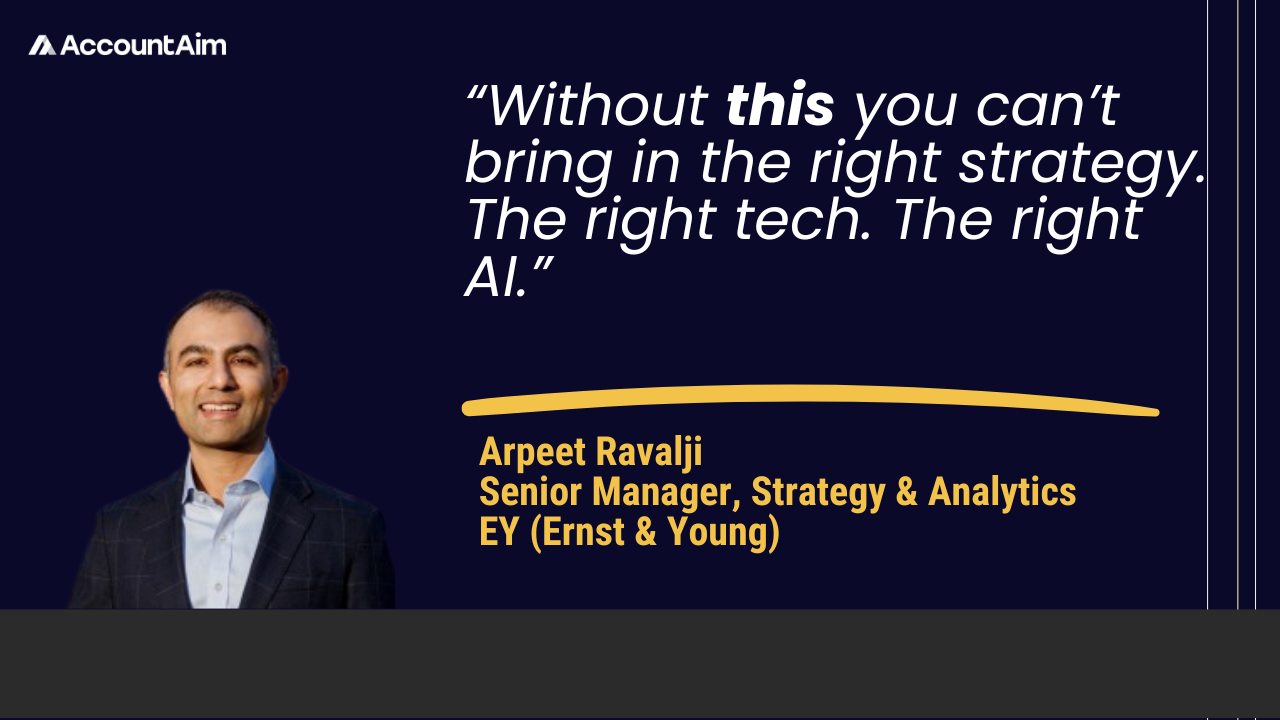
And this is where this comes in. And these are the places where you actually have levers, the pull every day to improve the GTM. If you don’t have this, I would say this is the first place we should go and get on and build. ’cause without this you can’t do anything else. Build a proper strategy, can’t.
Bring in the right tech, can’t bring in the right ai. It’s just gonna become really messy. But I’ll just hold right here ’cause it’s, I think I said a lot already if there’s any questions or anything. Yeah, no, this is super helpful. We’ve got some questions coming in. I think going back to the last slide actually there’s clearly a lot on it.
I think RevOps teams are responsible for many of these things, if not most. As you think about, where should someone start, they’re dropped into a new role. Are there areas in here that you’d start, every kind of engagement with, where you’re focusing on we should do this first.
Like, how did you maybe think about the prioritization of, all of these things for, what are traditionally kinda lean teams? Yeah, so I might be a little biased, but I always like looking at current customers. So all the way to the far right and looking in, how can we reduce churn?
Because a lot of times when I’m on deals, that’s the first thing that a PE investor might look at. And they wanna make sure you have a strong customer base that you could grow from. So anything you could do around understanding what does your current customer base look like? Who are your strongest segments?
How can you make sure that, you could decrease customer help. Like increase customer help, but stay away from the customers that aren’t doing well. So I think overall looking at ways that keeping your customers strong and that you could grow from over time. One thing you mentioned is segmenting, and this comes up in a lot of the conversations we have, what’s the right level of segmentation that you’re doing or, is there a kind of like common segments that you’re doing every time?
Is it, splitting it by employee size or industry that you’re continually coming back to? Or is it really kinda like bespoke and custom for every kinda engagement that you’re working on? So typically you would want the basics of revenue each customer by account size. So how much are they spending with you?
How large is that business? What vertical are they in? Are they in hospitality, retail, and so on. But you also that we don’t often get it, but you can enrich it through products like Clay or other, there are other competitors getting information on their technographics. ’cause I think that’s really helpful of understanding Okay.
Of the customer base that are seeing strong NRR. Do they have a certain specific tech stack that our product works well with? And that’s maybe have a feedback loop back to marketing and new sales that you can leverage. So I think that’s where like the more bespoke part of it happens and understanding what’s happening.
And then I would say often at times I’m working with a lot of, businesses that are selling software to like retail. So also knowing where they are, what are like the demographics of the area they’re living in for that retail software. If it’s say like a Burger King and you’re selling like a POS system to them do they have the right demographic there and like where are there other retailers that have similar demographics that you haven’t penetrated?
So sometimes like geospatial information might be helpful depending on the type of company you are. Super helpful. Maybe going to nine. So there’s a ton of great metrics on here, and I love the idea of getting to all of them. I think one of the pain points, and one of the questions that we really commonly get here is how do we approach building these metrics if our data isn’t perfect?
How do you think about coming up with the right calcs here? Finding the balance maybe between like data quality while still getting to, something in the nearer term where, some of this might be a little bit messier than I think everyone in ops would like.
Yeah. So if your data’s messy, I think the way I would approach it to prioritize which metrics to build is that through, say through the sales cycle the three metrics that I always have that you could track and I would do it at a core level. So what I mean by that, when a new pipeline is qualified, so that’s like the moment that it becomes like a.
A specific cohort. And from there you wanna look at conversion metrics throughout the stages the size of that deal, and then also the lot time it’s staying in the stage. And you could do a lot with that as you’re, hacking your GTM. So at a moment where you notice, oh, demo conversion rates are going down you could look at the other two metrics, understand, oh, they’re just taking much longer.
Why are they taking much longer? And then you could do some interviews with folks that are doing demos that narrow in what the issue is and then go solve for it and you might not need other metrics. I think those three metrics help a lot with understanding what’s happening. I love the idea of prioritizing some of the the key metrics here.
First, I think this can really quickly turn into the boil, the ocean exercise. But I love getting to the, just a couple that makes sense. I know we’ve got a couple more slides to cover, but one area that’s come up has been around, are you seeing, anything from, AI that is helping, you get to these metrics faster or, helping improve the quality that maybe didn’t exist, pre 2023, call it.
Yeah, I would say the one area I’m seeing ai. Benefiting with data is that we’re able to clean the data quicker and faster than before. I think a lot of times it took a lot of hands on keyboard work, trying to figure out how to clean it up, and I would say cloud is like the one like tool that a lot of folks are using, including myself, to write code for you to fix.
What’s wrong with the data? Say if you’re working with AR data and you have a lot of AR gaps instead of trying to figure out the right, right way to build the Logic Cloud could do it for you and you could get the insights quicker. And then when you’re doing insight building, I oftentimes use ai.
I plug in like a spreadsheet or like just the data or take a screenshot of it and it helps helps me ideate or film figure out what the story is happening. In the business. So I think that’s like a good way to leverage it right now. If you do happen to see like a data issue happening more often and often, I think that’s where you could use AI to augment that work instead of doing it over and over again.
It can also help you do alerts when anything looks a little bit odd having some of those agents embedded in your organization. Makes a ton of sense. We got another question that came in is what are you seeing the top performing GTM looks like versus call it an average GTM team? Is there something that’s separating out, the 1% of those top performers?
So I, this might be like a bias, but I think I always like it when the admin or tech side of the RevOps or GTM team is like one pillar, and then you have a pillar of folks that are like more strategy analytics folks and they’re working in partnership with one another ’cause. I think oftentimes it’s hard to find people that are good at both.
Which I find the market is hiring for a unicorn typically to do all of that. But if you have a team of doing both, I think that’s where I see GTM teams being the most successful. I think I had that opportunity was at, when I was at Stack Overflow. I led the BI and strategy side of it, and then I had one of my peers who owned like the Salesforce and the tech stack and him and I just worked and tackled problems one by one.
And it also helped that we were both like really good friends, so it just helped us just make things happen. It makes total sense. And for what it’s worth I think I’ve experienced the same thing. I will say being friends with your counter person on their side definitely makes it a lot a lot better.
No, this is great. I got a couple more slides. Anything else that you wanna cover here? Or Pete? Nope. I think this is the foundation. So really think through what are like the right metrics. Don’t boil the ocean like Josh was saying. Just build a few metrics that really tell the story of what’s happening through each stage.
Got it. Rp, this has been so informative, so helpful. We love to keep these kind of like quick, fast paced and really appreciate the time. We got a comment saying we’re so lucky to get to listen to you for 30 minutes without paying your EY rates. We couldn’t be more appreciative. And I’ll let you guess who sent that one in, but rp if folks wanna stay in touch with you, ask questions on any of this or trying to stand some of this stuff of themselves where can they kinda find you?
What’s the best place? Find me on LinkedIn, just ping me. We could Dr. We could get on a call and go from there. Let me know. Amazing. RP really cannot thank you enough for this. It’s been such a pleasure to get to know you and appreciate you taking the time outta the day to do this. Really appreciate it.
We’ll be sharing the recording of this with everyone that has attended. Thank you all for joining and yeah, follow follow RP on LinkedIn. He’s putting out some of the best content that’s out there, but thank you so much again. Yep, no worries. Take care all.