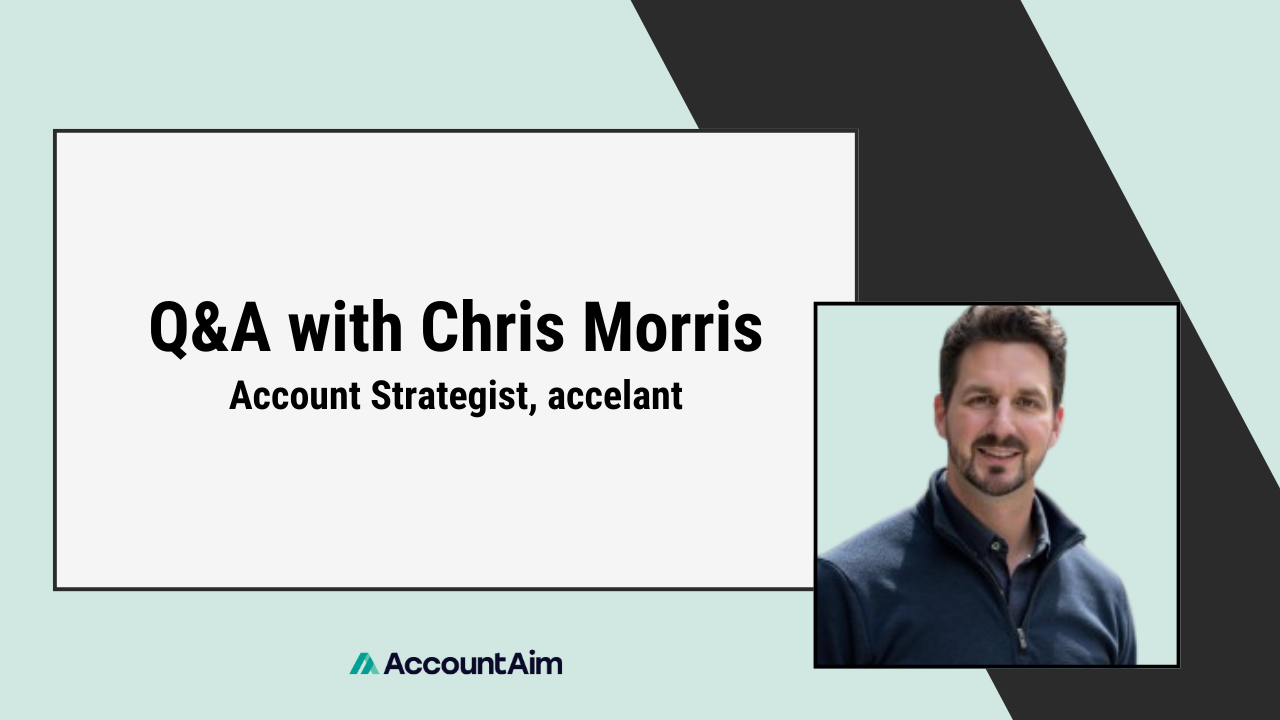

Q&A with Chris Morris
In many organizations, RevOps takes shape before there is a shared understanding of what the function is meant to own. A new RevOps hire is often brought in to clean up reporting, stabilize CRM data, or support sales leaders who are feeling friction in the go-to-market motion. In early or less mature environments, that mandate can quickly expand, especially for solo RevOps leaders stepping into the role for the first time.
Chris Morris has seen this pattern play out repeatedly. With more than 15 years of experience across sales operations and RevOps, he has built revenue operations foundations in startups and growth-stage companies spanning multiple industries and revenue models. Over time, his work shifted from task execution to trusted partnership, helping leadership teams design buyer-centered systems that scale. In this conversation, Chris shares a practical framework for building RevOps from the ground up, with an emphasis on trust, restraint, and long-term adoption.
Q&A
When you step into a company with an immature RevOps function, what framework do you use to assess and build the foundation?
When you walk into an organization like this, the most important thing you can do is slow down. The instinct is often to start fixing things immediately, but that usually leads to solving the wrong problems.
“First thing I do is just go in and diagnose, assess current state, understand what they’re using, what tech they’re using, what their buyer’s journey looks like, and specifically understand what expectations are versus what reality is in the go-to-market process.”
At this stage, you are listening more than building. You are observing how work actually gets done, where teams feel friction, and where leadership assumptions break down. That diagnostic phase sets the tone for everything that follows. It also establishes trust, which becomes essential once you start introducing change.
Why is understanding the buyer journey the starting point for effective RevOps design?
If you want RevOps to work, you have to anchor it in the buyer experience, not internal structure. When you map the buyer journey, you start to see where prospects enter the funnel, how many handoffs they experience, and where momentum slows or stops altogether.
Looking at the journey this way forces alignment across marketing, sales, and customer success. You begin to see how breakdowns between teams show up as stalled deals, inconsistent experiences, or churn later on. Without a shared understanding of how buyers move through the organization, process changes might improve internal efficiency while quietly hurting the customer experience.
How do shadow processes and top-performer behaviors influence how you design scalable RevOps systems?
Some of the most valuable signals you will find are not documented anywhere. Shadow processes usually exist because teams are compensating for missing tools, unclear processes, or gaps in enablement.
“There’s always a lot of gems, especially with the higher performers, and what they’re doing that’s not currently set up in place. The question is what can be repeatable across the organization and what can be done through automation or tools that aren’t in place today.”
By sitting in on calls and watching how top performers prepare, follow up, and move deals forward, you can identify behaviors that are worth scaling. Sometimes that means formalizing something informal. Other times, it means redesigning the system so it supports what already works instead of fighting it.
What principles guide your approach to designing processes and metrics in early-stage RevOps environments?
At this stage, restraint matters more than completeness. It is far easier to add depth later than it is to remove complexity once teams are overwhelmed.
When you overengineer workflows or layer in too many metrics too early, you create friction. People comply just enough to move forward, and the data loses meaning. Starting with lightweight processes and a focused set of metrics gives you room to learn, adjust, and build credibility before introducing additional structure.
How does company culture affect RevOps adoption, and how do you assess it when entering a new organization?
Even the best-designed processes will struggle if they clash with culture. When you enter a new organization, you need to pay attention to how teams collaborate, how decisions are made, and how accountability shows up day to day.
You can learn a lot by watching whether decisions rely on data or hierarchy, how incentives are structured, and how conflict is handled. Those signals tell you how change is likely to be received and how you should deploy it, whether that means pilots, executive sponsorship, peer champions, or a slower rollout.
What strategies have you found most effective for earning buy-in and driving change across go-to-market teams?
Buy-in starts when people feel included. If you involve teams early during diagnosis, they are more likely to trust the outcome, even if not every concern can be addressed immediately.
You also need to talk about outcomes, not mechanics. When people understand how a change affects deal flow, conversion, or earnings, resistance tends to fade. Finding champions within each function helps translate intent into action, and recognizing early adopters reinforces that new behaviors matter.
What advice would you give solo or early-stage RevOps leaders to avoid common pitfalls when building from scratch?
If you are operating with limited resources, self-awareness is just as important as technical skill.
“Being very aware of your own capabilities and not overcommitting is huge. As soon as you start overcommitting, you’re not able to deliver on those timelines.”
You have to be disciplined about prioritization and clear about tradeoffs. Communicating capacity, setting realistic expectations, and maintaining focus builds trust with leadership over time. That trust creates the space you need to deliver work that actually sticks.
Go Deeper
If you enjoyed this Q&A, check out the full conversation with Chris Morris at YouTube or Spotify.
About AccountAim
AccountAim is the planning and analytics platform built for Strategic RevOps teams. With AccountAim, RevOps teams connect all of their fragmented GTM data, automatically snapshot and see trended changes over time, and build full-funnel reporting — all without SQL or data team support. Learn how Strategic RevOps teams use AccountAim to streamline forecasting, territories, cross-sells and more here.
James Geyer: Hello again. We’re back for our latest episode of boardroom RevOps, where we’re bringing you valuable tips from RevOps experts so you can make to the C-Suite. I’m James, the co-founder of AccountAim, the RevOps BI platform. Uh, excited to welcome Chris Morris today.
He is the leader in InflectionPointe Consulting. Chris, great to have you on.
Chris Morris: Thanks for James. Uh, I appreciate it’s, it’s good to be here. Um, yeah, thanks for having me.
James Geyer: Yeah, it’s gonna be a fun one. Chris has lots of experience building out the RevOps Foundation, um, both in his consulting, but also kind of in-house at a, at a bunch of, uh, earlyish stage companies, or at least early from RevOps maturity perspective.
Have a lot of folks who are kind of solo RevOps folks, uh, kind of walking into new jobs a lot. So I think this will be pretty topical. Um, we’ll dive into building that foundation and some best practices and learnings. Um, but first, Chris, do you wanna share your background a little bit more detail?
Chris Morris: Yeah, absolutely.
So I’ve been kind of in the RevOps sales ops world for the last 15 years. Kind of fell into it from, uh, from early on doing more operational stuff. Sales ops wasn’t a thing at, at the company I was at, it was a startup, supporting non-profits, more of a donor management system, and, uh, started taking on some of those responsibilities and then grew from there into more of a sales ops role, and then evolved into RevOps.
Certainly was kind of a. Task taker. In my early career, I became more of that consultative business partner later on, and the last really five or six years have been going into startup type environments, whether that was true startups or whether that was larger companies that were optimizing a specific division within their company, but either optimizing their, their revenue operations with, which didn’t have much build up yet or completely building it up from the ground up.
Certainly learning each each time, and, uh. Uh, different revenue models, different, uh, different industries, gleaning from each one, understanding the nuances and, uh, applying those kind of as I go. Uh, not necessarily a rinse and repeat, but certainly, um, things that I can continue to, to apply as, as I’ve moved on in my careers.
James Geyer: Yeah, it’s an interesting thing about RevOps is there’s so many flavors of it scopes, different types of business models, that it’s kind of just like a stacking of knowledge over time, right? It’s never kind of fully complete.
Chris Morris: Absolutely. Yeah. And, and I mean, when the way the environment’s changing now with technology and ai, it’s, it’s, it’s, it’s certainly never complete
James Geyer: a hundred percent.
Um, well let’s dive into it then. So maybe just starting like at the highest possible kind of altitude, like talk me through like your general framework for building out the RevOps Foundation in a company that is kind of less mature on the RevOps front. Like any, any mental models or kind of things you think about when you step into that.
Chris Morris: Yeah, I mean, first thing I do is just go in and, and diagnose, assess current state, understand what they’re using, what, what tech they’re using, what their buyer’s journey looks like, um, and specifically kind of understanding what expectations are versus what reality is in the go-to market process.
There’s a lot of shadow processes that happen that leadership may or may not be aware of, um, that, uh, you know, some of ’em are, you can glean from and, and apply it across the board, and some of ’em are. Just because they don’t have another route, they don’t have another path, there’s not a process in place or a tool in place.
And so just understanding what current state is, uh, to be able to identify some of those, identify the gaps, identify opportunities for optimization, and not rushing in to start changing and building. ’cause you’ll end up probably rebuilding. Uh, and, and, uh, certainly, uh, struggling with adoption in, in the change management side.
If, if you go in there like a bulldozer. Uh, and, and, and start, uh, uh, just kind of throwing your experience around. So that’s the first thing I do, is just diagnose, start to build relationships. Start to build that trust and just start to understand what is it that they do today? What is it that the buyers experience?
And, and, and go from there. Once you have that down, you can start to design and kind of build the roadmap out. Identify quick wins more so for that relationship building. Identify those quick wins that can. Help your sellers save, you know, 20, 30 minutes here and there a day during their processes. They’re, they’ll start trusting you real fast and, and opening up more about some of their experiences and their processes.
But being able to, to develop that, to design that in a way that. Allows you to, to visualize it and communicate it is gonna be huge. And then you can start to collaborate more once you have that built out and start to understand what other needs there may be that aren’t current state, but are, are more future state, what the strategy is.
Um, and, and, and, you know, collaborating, uh, across the entire go-to-market team, especially with if you’re able to build out like true visual roadmaps and, and workflows of, of that current state and, and where you’re wanting to go with it. So, and that’s the second step in my process. And then it’s a matter of building it and deploying it, creating kind of MVPs of, of certain workflows or certain product changes, process changes, communicating that, identifying champions that can kind of pilot it for you and, and can champion across their team to support the change management when the time comes, support that adoption.
So that kind of, those, those three steps. And then, and then it’s a matter of iteration. Once you deploy it that first time, how do you continue to optimize on it? How in other ways. That it can support other functions, other, other steps in along the buyer’s journey. And it’s a never ending, never ending journey as it relates to optimizing the go-to-market functionality.
Especially as companies continue to evolve and change their product offerings or their strategies, then you have to be able to pivot and optimize with it.
James Geyer: That’s great. I love the framework. Uh, we almost had, uh, an alliteration, for lack of a better word, we got. Diagnose, design, deploy, iterate. So maybe we gotta find a word that, uh, starts with a D for iterate, but I, I think that’s a great way to think about it.
You started off in kinda like the diagnose piece, which I think is so important. Um, we’ve heard so many, like many other great RevOps leaders mention this as well, starting by understanding the buyer journey. Like when you come in, like how can you kind of best understand the buyer journey?
Chris Morris: Yeah, I mean it’s, it’s important to understand that one, because your company’s purpose should be somewhat driven by the buyer’s needs and the buyer’s needs.
Should be reflected in in their journey. So starting to understand the handoff process. Where does a buyer first enter in into your lead flow? Is it through marketing intervention? Is it product led? Is it through website? Things like that. Where does that handoff look like when it first gets over to to sales?
Do you have an inbound team, BDR team? What does that structure look like? For, for your sales teams, how many handoffs are there, how many faces are they having to go through to, to get to that end result? And then what’s the handoff process between sales and CS that are, you know, hopefully supporting that adoption within their company, supporting that, that value that your company’s bringing them, and then ultimately supporting the renewal and retention, you know, that, that, that awareness throughout that entire journey is, is important.
’cause any, anywhere where there’s. A breakdown, you’re, you’re gonna lose leads, you’re gonna lose potential customers. Those prospects are gonna fall out of the funnel or you’re gonna lose retention. So understanding that entire process and how each team handles that part of the buyer’s journey. And then again, the transition, those handoffs, it’s crucial to, to be able to optimize anything, uh, and, and have that alignment.
’cause otherwise you’re just gonna cause more friction within the buyer’s journey. If, if you’re not fully understanding of, uh, the alignment between. Go to market team and, and um, uh, departments.
James Geyer: Yeah, that’s great. I think I would just kind of like reiterate, ’cause I, I strongly agree that aligning folks on kind of like definitions of how things are flowing through the funnel and the customer journey is so important to get people on the same page of SLAs and how things should be worked.
But then also kind of like the drop off to your point of like where are things like leaking out of the process or really suboptimal for the buyer and kind of impacting the bottom line, whether that’s on net retention or, or top of funnel to converting. So I think that’s kind of well put.
Chris Morris: Yeah, absolutely.
And as it relates to the definitions, you know, having a strong enablement process as well throughout to be able to, to, uh, educate and, and train on those, those definitions, especially if you’re having to align some that are, that are currently mismatched. Having that, having that strong enablement, whether that’s a dedicated enablement team or within RevOps, having those skills.
‘Cause that’s not something that, that I always, I’ve done enablement in the past. I wouldn’t consider it my strong suit, but I have the ability to do it. But it, it, it takes a little more time for me to, to make sure, to, to include that in my process as I’m, as I’m aligning all, all the, all the different teams within go-to-market.
So.
James Geyer: For sure. Yeah. So just to kind of cap off the customer journey piece, then, how does it change, like the actions you’re going to take and like the design or deploy phase? Like is this really, is it a prioritization mechanism where it’s like, Hey, we lay this out and now let’s just go tackle the biggest gap?
Or like, I guess I’m asking again, like kind of the, the purpose what, what’s the action you take with it once you have it documented?
Chris Morris: Yeah, I think, um, there’s nuances depending on the needs and, and, and the maturity level of the organization. Uh, there’s definitely some, usually some, some low hanging fruit that you can apply and quickly see some dividends from.
Um, and if you can do that in a way that knowing that kind of future state isn’t a complete overhaul, then, then I would typically start with those, the, the low hanging fruit. How can we create. Quickly increase conversion or lessen the overall deal time, create less friction between handoffs, things like that.
If you’re having to go in and completely establish a true buyer’s journey within, go to market and, and, and launch a lot of things, then it might change your approach. But usually there’s some quick wins that you can gain. Some, even if it’s small amount of increased percentage of, of, of conversion and things like that.
I, I would start with those, but I would also work with the executive team, understand where they, they wanna prioritize. Um, based off of, off of, you know, context that, that maybe you don’t have before you started and things like that. But certainly documenting everything, identifying if they have a knowledge base, because that’s gonna lead into your adoption, that’s gonna lead into your onboarding and your training lead into all the enablement.
So being able to, to clearly, I, I document everything as you go, whether it’s current state or the changes that you’re making, have that in a, a source of truth type of system, confluence, or something of that nature. And, and be able to drive, drive your go-to-market team to that throughout the, the, the, you know, the launch of any changes and, and, and, and building that kind of discipline for them, um, to continue to go there is gonna be huge.
And, and, and, uh, your, your long term adoption of any changes or, or, uh, strategies that you’re making. So.
James Geyer: Yeah, that’s great. Not to mention if you expand the RevOps team as well. So helpful to have all that stuff kind of.
Chris Morris: Absolutely. Absolutely. Absolutely. That, you know, certainly the goal to continue to scale with the company.
Absolutely.
James Geyer: Yeah. You, you mentioned also in the diagnosed phase, kind of like ridealongs my words, not yours, but understanding that the processes today, call them the actual work being done in the customer journey. You mentioned a lot of like shadow processes I think is really great call out because it is so often true and not what people actually think is going on a lot of the times.
What are you, as you’re looking at these things, like what are you trying to understand when you’re looking at their existing processes? Because I think there’s more to it beyond just the buyer journey, right?
Chris Morris: Sure. Yeah. I mean, absolutely. There’s, you know, there’s, there’s things that, the shadow processes, there’s things that sellers reps do or, or CS does more so I would say in customer facing roles, things that they do out of either necessity or because.
They came from somewhere else where they found success in something that was set up that’s not set up here. And so, you know, I’ll, I’ll usually start with diagnosing from an executive level, what, what do executives expect or think is happening? And, and usually you’ll get certain things where like say this is happening and then they’ll kind of.
Take a couple steps back and they’re like, well, at least I, I think this should be happening. You know? And so there’s always some hesitation on certain areas of that buyer’s journey that when they start to really think through what they think is happening versus what they know is actually happening.
And then I start, as you mentioned, those kind of virtual ride alongs or maybe physical, depending on, on the industry that you’re in or, or the sales approach that your, your, your, uh, company has sitting in on those calls, understanding what they do, uh, to prep for those calls. What do they do after those calls?
Is there automation set up to capture some of that? Or are they having to notate everything and manually input at all? What is it they’re doing to help themselves push deals along faster? And it’s, it’s those things that typically aren’t documented, typically aren’t built into any sort of process. It’s usually your higher performers that have a lot of that, that knowledge, either from past jobs or maybe from just finding success in within that company and identifying.
What can be repeatable, what can be gleaned from that that can be repeatable across the entire organization and what can be done through, through automation and tools that maybe aren’t in place today. So, so there’s, there’s always a lot of gems, especially again, with the higher performers and, and what they’re doing that’s not, that’s not currently set up in place or maybe what they’re doing outside of expectations.
And maybe it’s a matter of changing the expectations of how the role should, should be flowing. Not only is it, does it have to be things that you’re, you’re adding to the process, but maybe the process needs to change because they have found a better way to do it. There’s no channel or way of communicating that and, and then implementing that.
James Geyer: Yeah, and I think that really bleeds into like the design element of this too. So you’re kinda diagnosing with some of the processes and then thinking about how do we scale out some of the, the things that are working well from a design perspective. If we think about like, you know, the companies in the early stages of the RevOps journey, whether that’s an early stage startup or just a company that’s hiring s for the first time.
Like any other thing else you would add on the design side from like a principal’s. Standpoint, like I kind of suspect you’re gonna say like, simple is better at this stage. Maybe that’s not the case, but anything else you kind of think about or guide to?
Chris Morris: Yeah, I would definitely say less is more. Usually, um, at this stage it’s, it’s a lot easier to add more as you go.
It’s a lot harder to start to, to peel away things if you, if you make it too complicated at first and you run the risk of. Creating bottlenecks. If you overcomplicate validation rules or certain things, especially if it’s a manual intervention on their part, you run that risk of, of them just putting in information just to, to check the boxes so that they can move the deal along or, or something of that nature.
So I would certainly say less is more as you continue to understand the process, as you continue to understand kind of the overall strategy and vision of, of the company to know what your true metrics are that should be being tracked and things like that. Then you can start to implement more, more detail, more, more complexity into the overall process.
But, but absolutely, yeah. Less is more simple is, is, is typically best early on in the, the development and the design process of that before. Certainly, it certainly creates less friction when you start to deploy it.
James Geyer: Definitely. Yeah. I love that you brought up metrics too. As you know, a founder of a go to market BI kind of platform, that’s all metrics driven.
I, I think you’re spot on that like less is more in the beginning and if we get people in the habit of looking at the couple metrics that actually really do matter, that starts to open up more questions and people then want to dive a bit deeper. Versus if you throw them a page of, you know, 20 different things, it’s just gonna become noise.
And so I think that sets really spot on advice. Absolutely. Tell me about. Culture as well. I think culture kind of bleeds through all of this. Diagnose, design, deploy, iterate. I mean, I think we’ve all experienced various go-to-market orgs that are, I’m trying to be political here. They have different degrees of receptiveness or interest in process structure, data, and the like.
As you’re coming into a new role, like how do you assess the culture from leadership and how does that assessment kind of bleed into how you operate?
Chris Morris: Yeah, culture’s huge to understand what the best way of deploying things are, how you’re gonna get best adoption, uh, and things like that. And yeah, to assess that, it’s, there’s, there’s couple ways that I’ve done it.
I like to talk to teams or individuals on those teams, kind of about their collaboration or their integration with other teams. Understand is, is there alignment, is there a lot of blame that’s happening? Start to understand how they, how they collaborate and, and, and the healthiness of those relationships between.
Different teams, different departments. I like to work with executive team to understand how decisions are made. I would say most off the bat are gonna say that their decisions are made from data-driven insights, but it’s not always the case. You know, sometimes they are, which is great. Sometimes it’s more personality driven, and so.
Starting to understand how their, how their decisions are made. You may or may not be able to change that off the bat, but you can certainly always support the data side of things. Doesn’t mean it’s gonna over completely change their, their structure or their, their strategy of the personality side, but understanding that, overall understanding, like how they view processes, are they process driven organization where they find it helpful or do they have, you know, more.
Sales individuals or, or, uh, customer facing individuals that find processes as, as sort of a burden, something that just gets in between them and, and their customer. So understanding some of that, you know, if there’s a level of rewards that happen within organizations, whether that’s just praise or whether that’s, uh, some sort of incentivization, understanding how their reward process works, um, and, and then ultimately also understanding how conflict is handled.
So if you can understand all of those. Then you can apply that in your ability to deploy whatever changes you’re, you’re making. You know, if it’s, if there is a reward process, you know, have a gift card, doesn’t have to be anything large or, or have some sort of announcement of praise when like certain key milestones are hit during that change process.
You know, calls logged in this way or so many certain, you know, particular fields that are wanting to be tracked have been appropriately submitted, uh, as far as the information that they’re looking for or something along those lines. Understanding that culture ultimately will help drive how you deploy it, how change management works, their readiness for change and things like that.
James Geyer: I think those are some really good actionable tactical things that you can do for an org to understand how to kind of implement change in the places that are a little bit more, say, less enthusiastic about it. So I think that’s, that’s a really good kind of. Checklist. My, my favorite story is, uh, we worked with a company and, you know, didn’t love following a ton of process, but really competitive sales organization and just gamifying all this into leaderboards from data hygiene to activity tracked and things like that did wonders, which, which is so funny.
I just speak to human nature.
Chris Morris: Absolutely. If, if they’re a competitive team, which typically sales are, um, gamification can work really well with adoption. It’s just a matter of understanding what types of games that, that, that it requires.
James Geyer: Yeah. So it’s like our, our old reptile brains can’t help, but it’s, it’s always so funny to me.
Um, okay, so wrapping up here shortly, sadly, we’re almost outta time, so buy-in, I wanna talk about as well, ’cause I think that’s actually slightly different than what we just talked about in terms of like getting adherence through. Compensation rewards praise, gamification. When you’re working with a company that’s maybe less inclined to do process for the, the first time or, um, implement new friction, I guess even if it’s for the best, like how do you communicate or enable or get buy-in because that’s kind of a different story, right?
Like how are you talking to go to market orgs, whether it’s sales, marketing, leadership, folks on the ground to say like, this is actually like worth your while.
Chris Morris: Sure. Yeah. I mean, I think there’s several key factors providing. Autonomy and acknowledgement of their feedback, including them in that diagnosis process.
That was, that early phase, I think goes a long way to give them the voice that they, that they want to have. Everyone wants to have that level of influence. Everyone has opinions, everyone has feedback that they wanna provide, so being able to give them that voice, include them in that diagnosis early on, you know, you’re not gonna be able to include everything.
Every complaint can’t be fixed through an initial. Development, or maybe not even at all, depending on what it is, but being able to give them, to acknowledge that, that, that they have something to offer in the process is, is gonna be great to a certain degree. We have to be sales individuals as well of our own.
Talk more about the outcomes of what these processes are gonna provide. I talk less about the features. Features tend to help them under or make them think it’s extra tasks, extra steps for them. But if you’re able to provide the out outcomes that, that these changes, especially when it comes to like any sort of incentive, commission based role.
Yeah. If the changes you’re making is gonna impact or increase their money in their pocket like that, that’s huge. A lot of ’em won’t even care what it is they have to do. If it’s gonna help them convert more, sell,
James Geyer: say less. Yeah.
Chris Morris: Higher contracts, whatever the case may be. And so, you know, really focusing on the outcomes.
If what you’re doing is, is, has a lot of high, uh, cross-functional, uh, visibility and, and impact that, that can be, especially from an executive level. Like if you’re, if, if what you’re doing is, is positively impacting across multiple teams, you’re gonna get a lot of buy-in. And I mentioned earlier, you know, finding the champions.
Communication kind of from the top down is gonna help. But finding the champions on those teams that are being impacted, someone that you can pilot with, get the buy-in early from them, that’s gonna help them. Not only will it help the rest of the team have buy-in, but it’s, it’s gonna help your coaching.
Like they’ll be able to coach the other teams. They’ll be able to communicate with them in a way that, that they’ll understand better versus maybe what, both being new to the organization and also being more. Operationally minded versus sales minded. It’s, it is, it’ll help out a lot. Or, you know, marketing minded what, whatever the team may be, finding those champions are, are gonna go a long way, uh, and buy in across the entire org that that’s being impacted on whatever, whatever changes.
And then, like I mentioned, celebrating those early adopters case may be through gamification. Praise through. You know, I’ve seen some really interesting ones where, uh, if you hit a certain goal, more so monetary goal, if you hit a certain goal, like you get to choose to a billboard that you can put in, you know, the company will pay for a billboard and you can put whatever you want on there within limitations, even things like that, like bragging rights, sort of things of that nature, like, you know, get creative with it.
But, um, celebrating those early adopters. It, it always helps. So
James Geyer: that’s great. Chris, this is awesome. What, uh, we have time for one last question. What did I miss here? What question should I have asked you? Or maybe the, the easier question for me to ask you is like any other advice. Do you, is there any other advice you have for folks building out an early RevOps foundation?
Any hidden gotchas you’ve come across, or is there anything you’d, you’d leave folks with?
Chris Morris: Yeah, I think it’s, it’s, um, I have a lot to cross my mind. Um, building trust in various ways, especially when you’re a new organization, especially when, if you’re, like, a lot of startups are gonna be, they’re hiring, they’re wanting to hire almost unicorn level, uh, employees that, that can do it all, and they’re individual contributors.
Uh, being very aware of your own capabilities, being very aware to not, not over commit. You can still acknowledge, you can still prioritize. It helps to be over communicative on those requests, on those designs. But as soon as you start overcommitting, then you, then you start, you’re not able to develop, you’re not able to deliver, uh, on those, those timelines.
So having a good understanding of where, where your strengths are, where your weaknesses are, and, and being able to really prioritize in a way that that makes sense. And you can always adjust your, your roadmap, your timelines, but as long as you’re communicating in a way that. That, um, is, is very clear and helpful to typically leadership in a way that helps them understand like where you are, why things are being delayed, how you’re having to prioritize certain things over, over others.
Um, there’s always a lot of requests when in someone new starts. And, um, understanding your capacity and your skills and, and communicate in a way that. Helps them understand that it’ll save you a lot of heartache. It’ll save you a lot of late nights trying to build something out because you may have overcommitted.
And so that, that’s really my, one of my, it was something I had to learn the hard way for sure. And it’s still a challenge from time to time, uh, to not, yeah, not over commit. And especially when I get excited about something, something I want to, yeah. I wanna jump right into it if it’s a good idea. Sure. And sometimes make a big impact, especially again, if you’re the individual contributor, there’s the day-to-day that you have to.
Continue to maintain. And so setting, setting those expectations, those boundaries in a way that you know, is respectful and, and, and, and still productive. It goes, yeah, it goes a long way.
James Geyer: Well, put prioritization is the other side of the coin on this whole discussion now. There’s only so much you can do, especially if you’re a solo RevOps person.
We’ve, we’ve talked a lot about that in past episodes actually, and you can spend a lot of time with all the techniques. But Chris, sadly, we are out of time. This is awesome. Thanks so much for coming on and sharing your learnings. This is great.
Chris Morris: Absolutely. Thank you for having me, James. It’s been a pleasure and I, I look forward to continuing seeing what else you produce on these.
It’s, it’s been great.
James Geyer: Awesome. Thanks.